Disclosure: we earn a commission if you buy through links to our partner wine shops, at no extra cost to you. Links to Bee d'Vine are ordinary links at the moment and earn us nothing. How this works.
The short answer: Sauternes and Tokaji Aszú are the grape wines most often described as tasting of honey, and icewine, sweet German Riesling, sweet Chenin Blanc such as Vouvray, and Vin Santo are often described the same way. None of them contains honey. The flavor comes from grapes concentrated by noble rot, frost or drying, or from aromatic varieties such as Muscat. If you like semi-sweet honey wine, start with a lieblich Riesling or a Vouvray demi-sec; if you like sweet or sack mead, go straight to Sauternes or Tokaji.
Why some grape wines taste of honey
Honey in a tasting note is shorthand. Decanter's guide to tasting terms says the word is used mostly for dessert wines, because honey's defining traits are sweetness and a thick, syrupy texture, and especially for late harvest wines and wines made from grapes touched by noble rot. It also turns up as a sign of maturity in older sweet whites. Four things put that character in the glass.
Noble rot. Botrytis cinerea is a fungus that, in the right weather, attacks very ripe, thin-skinned grapes. When misty autumn mornings give way to sunny afternoons, it pierces the skins, water evaporates, and the sugar and flavor concentrate. The Bordeaux wine council describes the result as a "honey flavored wine", and Wine Folly says noble rot adds "ginger, saffron, and honey" to sweet wines. In the wrong weather the same fungus becomes gray rot and ruins the crop.
Late picking, freezing and drying. Grapes left on the vine get riper and sweeter. Icewine grapes are left until they freeze and are pressed frozen, so only concentrated juice runs out; Wine Folly calls icewine "honeyed and richly sweet, similar to a noble rot wine". Vin Santo and Pedro Ximénez concentrate their sugar a different way, by drying the grapes after picking.
Age. Decanter notes that Chenin Blanc, from South Africa in particular, can develop a honeyed character as it ages, and Wine Folly lists honey among the notes of older Gewürztraminer. Aged Riesling is a different case: Wines of Germany and Wine Spectator both describe it developing a petrol-like aroma instead.
Aromatic grapes. Some grapes smell sweet and floral even when the wine is dry. GuildSomm traces Muscat's scent to compounds called monoterpenes, which it likens to rose and geranium, and Wine Folly lists orange blossom and honeysuckle among Moscato's aromas. Wine Folly also credits volatile thiols for Chenin Blanc's "honeyed and beeswax aromas", and lists honeysuckle for Viognier, a wine it calls typically dry.
Eight styles with honeyed character
The first four are dessert wines. The last four are whites that run from dry to sweet, so they suit a wider range of honey wine drinkers. Where one of our partner retailers has a bottle in stock, we show it. We have not tasted these bottles, and the notes on each card are the retailer's own.
1. Sauternes and Barsac
The benchmark. Sauternes is made in Bordeaux, mostly from Sémillon with Sauvignon Blanc and Muscadelle, using noble-rot grapes that pickers harvest in several passes through the vineyard. Wine Folly puts it at 120 to 220 g/L of residual sugar and lists honeyed apricot among its notes. Barsac lies inside the Sauternes appellation and may use either name; the Bordeaux wine council says Barsac picks up spice, tropical fruit and honey as it ages.
2. Tokaji Aszú
Hungary's noble-rot wine, made mostly from Furmint. Wine Folly lists tangerine, apricot, honey, ginger and marzipan as its main flavors, with high acidity and 11.5% to 13.5% alcohol. Since the 2013 harvest every Tokaji Aszú must carry at least 120 g/L of residual sugar. Some labels still show a puttonyos number, but it is now optional.
3. Icewine and late harvest
In Ontario, icewine grapes are hand-picked at -8°C (about 18°F) or colder and pressed right away, and the juice must reach at least 35° Brix. Riesling and Vidal make most of it. Germany's Eiswein is picked at -7°C or colder. Late harvest wines come from grapes picked near the end of, or after, the normal harvest; Ontario's minimum for them is 22° Brix, so they start from less concentrated juice than icewine.
4. Vin Santo and Pedro Ximénez
Both are made from dried grapes. In Tuscany, Vin Santo grapes dry for months on mats or in the rafters before pressing; Wine Folly credits the Trebbiano in the blend with honeyed flavors, and the style runs from nearly dry to syrupy. Pedro Ximénez sherry comes from sun-dried grapes, with more than 212 g/L of sugar and 15% to 22% alcohol, and the sherry council lists raisins, figs, dates and honey on the nose.
5. Riesling, from Spätlese up
Riesling runs from bone dry to very sweet, so the label matters. Decanter names German Riesling at Spätlese, Auslese, Beerenauslese and Trockenbeerenauslese level among the wines where honey shows up in tasting notes, and Wines of Germany calls Trockenbeerenauslese "honey-like". Spätlese and Auslese are ripeness levels rather than sweetness levels, though, so also look for lieblich (semi-sweet, up to 45 g/L of sugar) or süß (sweet, above that) on the bottle.
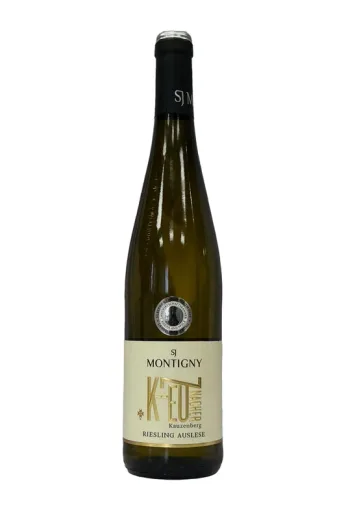
SJ Montigny Riesling Kauzenberg Auslese 2020
- Riesling Auslese
- Sweet
- Germany
Honey and apricot in a German Auslese, a sweet Riesling with a score on the merchant page.
Buy Wines Online says: A late-harvest Nahe Riesling with apricot, honey, candied citrus peel and a delicate floral lift, rich yet balanced.
WE 90 (as listed by Buy Wines Online)
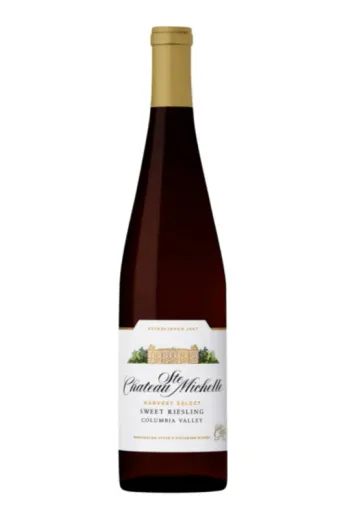
Chateau Ste. Michelle Harvest Select Sweet Riesling 2024
- Sweet Riesling
- Sweet
- Washington
A Washington sweet Riesling with honey in the tasting notes.
Buy Wines Online says: Aromatic sweet Riesling with lush peach, apricot and honey notes, its sweetness balanced by crisp acidity.
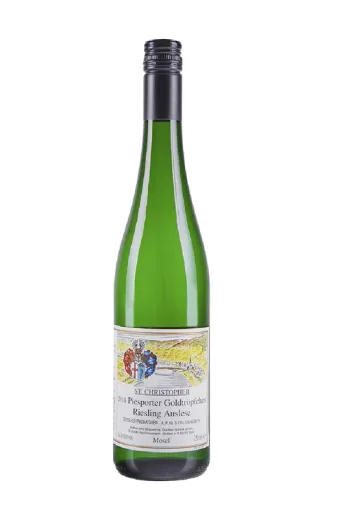
St. Christopher Piesporter Goldtropfchen Riesling Auslese 2025
- Riesling Auslese
- Sweet
- Germany
An affordable Auslese with honey and apricot notes.
Wine On Sale says: Golden, richly textured Mosel Auslese with dried apricot, honey and candied citrus, a silky mouthfeel and bright acidity.
6. Chenin Blanc and Vouvray
Chenin Blanc can show honey and beeswax even when it is not a dessert wine, thanks to the thiols mentioned above. In the Loire, Vouvray comes sec (dry), tendre (off-dry), demi-sec (sweet) and moelleux (very sweet), and Wine Folly lists honeysuckle among its typical aromas. Coteaux du Layon, Bonnezeaux and Quarts de Chaume make noble-rot Chenin.
7. Moscato and Moscato d'Asti
Wine professionals often describe Muscat as tasting of grapes, and Wine Folly lists orange blossom and honeysuckle among Moscato's aromas. Moscato d'Asti is the lightly sparkling version: around 5.5% alcohol, with 100 to 150 g/L of residual sugar in a typical bottle, though its gentle fizz makes it taste less sweet than that. Moscato also comes still, pink, red and as a dessert wine.
8. Viognier and Gewürztraminer
If you like the floral side of honey wine more than the sugar, try the aromatic whites. Wine Folly lists honeysuckle, peach and tangerine for Viognier and calls it typically dry despite its sweet aroma. Gewürztraminer is known for lychee, rose and ginger, and picks up honey with age; in Alsace it runs from dry through Vendanges Tardives (off-dry to sweet) to Sélection de Grains Nobles (sweet). These are the natural pick for a dry mead drinker.
How they compare with honey wine
The overlap is real but partial. Honey wine takes its aroma from the nectar the bees visited; grape wine takes it from the grape and from what happened to it on the vine. Three differences stand out.
- Sugar. The noble-rot wines are sweeter than a typical semi-sweet honey wine. Sauternes and Tokaji Aszú carry 120 g/L of residual sugar or more, which puts them beside sweet dessert mead on our sweetness scale. A semi-sweet honey wine sits closer to a lieblich Riesling or a Vouvray demi-sec.
- Acidity and tannin. Honey is low in acid and traditional mead has essentially no tannin, which is why it feels soft. Riesling and Tokaji are high in acidity; Wines of Germany describes the sweetness in many Kabinett Rieslings as balancing that acidity. Expect these wines to feel brighter than a mead of similar sweetness.
- Strength. Most mead is 11% to 14% alcohol, like table wine, and Tokaji sits in the same range. Pedro Ximénez is much stronger at 15% to 22%, and Moscato d'Asti far lighter at about 5.5%.
For the full picture of mead itself, read what honey wine tastes like and mead vs wine. If you would rather drink the real thing, our best honey wine picks cover dry, semi-sweet and sparkling bottles.
Serving temperatures and pairings
| Style | Serve at | Try it with |
|---|---|---|
| Sauternes, Barsac | 48 to 50°F | Blue cheese, foie gras, fruit desserts |
| Tokaji Aszú | 45 to 55°F | On its own, after dinner |
| Icewine | 2 hours in the refrigerator, or 15 minutes in an ice bucket | Fruit or creamy desserts, blue cheese, spicy Thai curry |
| Pedro Ximénez | 54 to 57°F | Dark chocolate desserts, ice cream, blue cheese |
| Riesling, Gewürztraminer | 38 to 45°F | Pungent cheeses such as Munster; Moroccan tagines with Gewürztraminer |
| Chenin Blanc, Vouvray, Viognier | 45 to 55°F | The dishes you would pair with semi-sweet honey wine |
| Moscato d'Asti | 38 to 50°F | Panna cotta, fruit salad, cheese with quince |
The rule from our honey wine food pairing guide holds for all of these: the wine should be at least as sweet as the dessert. Vin Santo is traditionally served after dinner with cantucci biscotti. Pour dessert wines in small servings (Wine Folly suggests about 3 oz for fortified wines), though a white wine glass is fine: Aline Baly of Château Coutet in Barsac told Decanter she prefers one to a small dessert glass for Sauternes, and that an opened bottle keeps for more than a week in the fridge. Storage for honey wine itself is covered in how to serve and store honey wine.
To browse more bottles by style, see the dessert wine, sweet white wine and sparkling wine pages in our Shop.
Frequently asked questions
What wine tastes like honey?
Sauternes and Tokaji Aszú are the classic answers, because noble rot gives them honeyed, apricot flavors. Icewine, sweet German Riesling, sweet Chenin Blanc such as Vouvray, and Vin Santo are also often described with honey.
Is there honey in Sauternes or Tokaji?
No. Both are made only from grapes. Honey is a tasting note for the concentrated flavor that noble rot creates; a drink fermented from honey is honey wine, or mead.
What grape wine is closest to mead?
It depends on the mead. For semi-sweet honey wine, try a lieblich Riesling or a Vouvray demi-sec; for sweet or sack mead, Sauternes or Tokaji; for dry mead, an aromatic dry white such as Viognier or dry Chenin Blanc.
Why does some white wine taste like honey?
Usually because the grapes were very ripe or concentrated: picked late, frozen, dried or touched by noble rot. Aromatic grapes such as Muscat, Chenin Blanc and Viognier add floral, honeysuckle or beeswax notes, and some sweet whites grow more honeyed with age.
Is Moscato like honey wine?
In aroma it is one of the closer matches, with orange blossom and honeysuckle notes. Moscato d'Asti is much lighter than mead, at about 5.5% alcohol against 11% to 14%, and very sweet on paper at 100 to 150 g/L of residual sugar, though its fizz makes it taste lighter.
Should dessert wine be chilled?
Yes, but not ice-cold. A Barsac producer quoted by Decanter serves Sauternes at 48 to 50°F, Wine Folly suggests 45 to 55°F for Tokaji, and the sherry council recommends 54 to 57°F for Pedro Ximénez.
Sources
- Decanter: Tasting notes decoded (honey)
- Vins de Bordeaux: What is noble rot?
- Vins de Bordeaux: The secrets of Sauternes
- Vins de Bordeaux: Barsac appellation guide
- Wine Folly: Sauternes wine guide
- Wine Folly: Five types of dessert wine
- Wine Folly: Tokaji Aszú
- Wikipedia: Puttonyos (2013 Tokaji Aszú sugar rule)
- VQA Ontario: Wine categories and labelling (Icewine, Late Harvest)
- Wine Country Ontario: Icewine
- Wines of Germany: Prädikat categories
- Wines of Germany: Levels of sweetness in German wines
- Wines of Germany: Riesling
- Wine Spectator: Know your grapes, Riesling
- Wine Folly: Riesling
- Wine Folly: Vin Santo wines of Italy
- Sherry Wines (Consejo Regulador): Pedro Ximénez
- Wine Folly: Chenin Blanc
- Wine Folly: All about Vouvray wine
- GuildSomm: The true chameleon, an introduction to Muscat
- Wine Folly: Moscato wine and its five styles
- Wine Folly: The magic of Moscato d'Asti
- Wine Folly: Viognier
- Wine Folly: Gewürztraminer
- Wine Folly: Sweet red wines shortlist (fortified serving size)
- Decanter: Sweet and fortified wines, how to serve and preserve