Disclosure: we earn a commission if you buy through links to our partner wine shops, at no extra cost to you. Links to Bee d'Vine are ordinary links at the moment and earn us nothing. How this works.
The definition
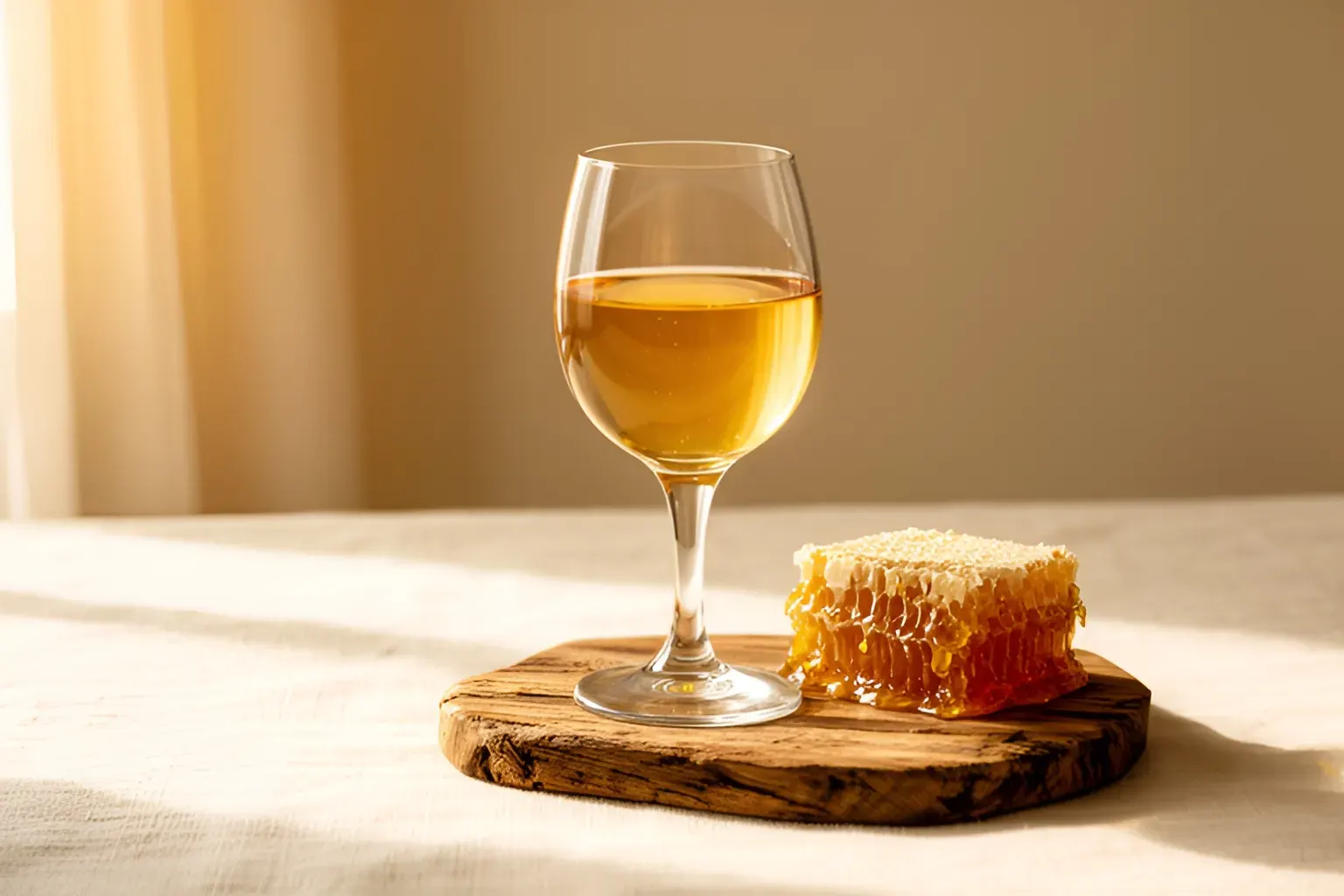
Honey wine is an alcoholic drink made by fermenting honey and water with yeast. It is the same thing as mead. It usually contains 11% to 14% alcohol, it can be dry, semi-sweet or sweet, still or sparkling, and it is served chilled like white wine.
In grape wine, the sugar that yeast turns into alcohol comes from grapes. In honey wine it comes from honey. That single swap changes everything downstream. There is no harvest season, because honey keeps. A traditional honey wine has essentially no tannin, because there are no skins or seeds. And instead of tasting of a grape variety and a vineyard, the wine tastes of whatever flowers the bees were visiting: clover, orange blossom, wildflowers, forest trees.
Honey wine vs mead: is there a difference?
No. Mead is honey wine, and honey wine is mead. "Mead" is the historical English word, from Old English medu, with cousins across the Indo-European languages: Welsh medd, German Met, Sanskrit madhu. "Honey wine" is the literal description, the way German (Honigwein) and Spanish (vino de miel) put it, and how Ethiopian tej is almost always translated.
It is also what the law calls it. In the United States, wine labels are regulated by the Alcohol and Tobacco Tax and Trade Bureau, whose standards of identity have no separate category for mead. Fermented honey falls under wine made from agricultural products other than grapes, and the designation on the label is honey wine. That is why many bottles say "mead" on the front for enthusiasts and "honey wine" in the small print for the regulator.
The two words have picked up different associations, though none of this is a rule:
| "Mead" tends to suggest | "Honey wine" tends to suggest | |
|---|---|---|
| Image | Vikings, Renaissance fairs, craft taprooms | Wine shops, dinner tables, Ethiopian restaurants |
| Typical style | Sweet, often with fruit or spice | Traditional, dry to semi-sweet |
| Packaging | Anything from cans to swing-tops | 750 ml wine bottle, cork |
| Who uses it | Homebrewers, meaderies, competitions | Wineries, regulators, tej makers |
There are bone-dry bottles labeled mead and sticky-sweet ones labeled honey wine. Treat the name as a hint about the producer's intentions and read the rest of the label for sweetness, alcohol and ingredients.
How honey wine is made
- Make the must. Honey is too concentrated for yeast to live in, so it is diluted with water. About three pounds of honey per gallon gives a wine of normal strength.
- Ferment. Wine yeast is added, along with nutrients, because honey lacks the nitrogen yeast needs. Over two to six weeks the yeast converts sugar into alcohol and carbon dioxide.
- Decide the sweetness. If the yeast is allowed to finish, the result is dry. If fermentation is stopped early, or honey is added back afterwards, it is sweet.
- Age. Young mead can be harsh. Months or years in tank, barrel and bottle round it out, which is why the best producers release late.
You can do all of this in a kitchen with a glass jug. Our one-gallon recipe shows how.
One drink, many names
Almost every culture with bees discovered honey wine independently, so it has a lot of names. The history of honey wine runs back about 9,000 years.
| Name | Where | Notes |
|---|---|---|
| Mead | English-speaking world | From Old English medu. The standard term among brewers. Older texts spell it "meade". |
| Honey wine | United States, wine trade | The plain-English description, and the legal class for mead on US labels. |
| Tej / mes | Ethiopia / Eritrea | Flavored with gesho, a bitter shrub. Served in a berele flask. |
| Miód pitny | Poland | "Drinkable honey". Graded by honey-to-water ratio, from czwórniak to półtorak. |
| Hydromel | France, Quebec | Also used in English for light, low-alcohol mead. |
| Met / Honigwein | Germany | A Christmas-market staple, often served warm. |
| Mjød / mjöd | Scandinavia | The drink of the sagas. |
| Medovina | Czechia, Slovakia | Usually sweet, sometimes spiced. |
| Chouchen | Brittany | Traditionally made with buckwheat honey. |
For why English ended up with two names for it, see honey wine vs mead above.
The main styles
"Traditional" honey wine contains only honey, water and yeast. Everything else is a variation on it.
| Style | What is added | Expect |
|---|---|---|
| Traditional mead | Nothing | The pure expression of the honey. Dry to sweet. |
| Hydromel (session mead) | More water | Light, 3.5% to 7.5% ABV, often fizzy and canned. |
| Sack mead | More honey | Strong and sweet, 14% and up. Dessert territory. |
| Melomel | Fruit | Berry, cherry, peach and so on. Very popular in the US. |
| Cyser | Apple juice or cider | Halfway between mead and cider. |
| Pyment | Grapes or grape juice | Halfway between mead and wine. |
| Metheglin | Spices or herbs | Cinnamon, clove, ginger, vanilla. Tej is a relative. |
| Braggot | Malted grain | Halfway between mead and beer. Not gluten-free. |
| Bochet | Caramelized honey | Toffee, toasted marshmallow, dark color. |
There are more than a dozen named styles in all, from Polish trójniak to maple acerglyn. Our guide to types of mead covers every one, with a recipe for most.
Things called honey wine that are not mead
Here is where the terms stop being interchangeable. A few products use the phrase loosely:
- Honeyed wine: grape wine with honey added. The Romans drank mulsum, wine sweetened with honey, and the Greeks had a similar drink, oenomel. Mulled wine sweetened with honey is a modern descendant. The alcohol comes from grapes, so none of them are mead.
- Honey-flavored wines. Flavored grape wines with honey in the name, such as Stella Rosa Golden Honey Peach, are semi-sweet grape wines with natural flavors. If it is the peach-and-honey profile you like, a semi-sweet honey wine or a peach mead is the closest thing in true mead.
- Honey beer is ordinary beer with some honey in the recipe; most of its sugar still comes from malt. Braggot, by contrast, is a real mead style fermented from honey and malt together.
- Honey liqueur, such as Bärenjäger from Germany or krupnik from Poland, is a spirit sweetened with honey, usually 30% ABV or more, and not fermented from honey.
Is it wine or beer?
Neither, strictly, but it sits much closer to wine. Beer is brewed from grain and needs a cooking step to turn starch into sugar. Wine ferments a sugar that is already there. Honey wine works the same way as wine: the sugar is ready, you add yeast, and you wait. It is also wine-strength, aged like wine, and served in a wine glass. United States regulators agree and treat it as a wine made from an agricultural product other than grapes. The full comparison, with cider and the hybrid styles, is in mead vs wine vs beer.
How strong and how sweet
Most table honey wine is between 11% and 14% ABV. Session meads start around 4%, and strong sack meads can pass 18%. Full numbers, plus calories and carbs, are in our guide to mead alcohol content and calories.
Sweetness is a choice made by the winemaker. The myth that all mead is sweet comes from the fact that, for a long time, most of the mead for sale in America was. Dry honey wine exists and is excellent with food. If you are not sure which you would like, read sweet vs dry honey wine.
Where to start
Begin with a traditional honey wine, without fruit or spice, so you can taste what honey itself brings. Choose semi-sweet if you like Riesling or Moscato, dry if you like Sauvignon Blanc or Pinot Gris.
More options, including dry and sparkling, are in our best honey wine guide.
Frequently asked questions
What is wine made from honey called?
Mead. "Honey wine" and "mead" are two names for the same drink. In Ethiopia it is tej, in Poland miód pitny, in France hydromel.
Is mead honey wine?
Yes. Mead is made by fermenting honey with water, which is exactly what honey wine means. United States labeling rules classify mead as honey wine.
Is mead a type of wine?
Yes, in the sense that matters to most people: it is made by the wine method, it is usually wine-strength, and United States rules class it as honey wine. Mead makers often treat it as a category of its own, alongside wine, beer and cider.
Is all mead made from honey?
By definition, yes. Honey has to supply most of the fermentable sugar. Fruit, spices, grains or grape juice can be added to create sub-styles, but a drink with no honey is not mead.
Can you really make wine from honey?
Easily. Honey is about 80% sugar. Dilute it with water so yeast can survive in it, add yeast, and it ferments just as grape juice does.
Is honey wine alcoholic?
Yes. Most honey wine is 11% to 14% ABV, similar to grape wine. Light "session" meads can be as low as 4% and strong sack meads can reach 18% or more.
Does honey wine have grapes in it?
Traditional honey wine does not. A mead fermented with grape juice is a separate style called pyment. Grape wine that has simply been flavored with honey is not mead at all.
Why do some brands say honey wine instead of mead?
Mostly to set expectations. Many shoppers associate the word mead with sweet, spiced drinks from Renaissance fairs. Producers making dry or wine-like styles often prefer "honey wine" because it tells a wine drinker what to expect.
What is honeyed wine?
Honeyed wine is grape wine that has been sweetened or flavored with honey, such as the Roman drink mulsum. It is not the same as honey wine: in honey wine, or mead, the alcohol comes from fermenting the honey itself.
Which is sweeter, honey wine or mead?
Neither term says anything about sweetness. Either can be bone dry or dessert-sweet. Check the label for words such as dry, brut, semi-sweet or sweet.
Is honey wine healthy?
It is an alcoholic drink, and no alcoholic drink is a health product. Traditional honey wine is gluten-free, which matters if you have to avoid gluten, but the alcohol matters far more than any trace of honey antioxidants.